Compliance Requirements for Payment Service Providers
KYB and KYC Verification
Regulatory updates

If you run compliance for a payment service provider or electronic money institution in the EU you already feel the pressure every single day. Regulators expect your team to keep client files organised complete and ready for review at a moment's notice while your business grows and onboarding volumes climb. The rules exist to protect consumers prevent financial crime and keep the payments market fair across the bloc but they also create real operational demands that many teams manage with spreadsheets shared drives and manual reminders. I have seen how exhausting that cycle becomes so this guide walks through the current requirements in plain language with the context you need to make sense of them and stay ahead
What EU Regulated Businesses Need to Know in 2026
Payment service providers in the EU include licensed payment institutions electronic money institutions and credit institutions that offer payment services. They must operate under a harmonised framework that balances innovation with strong safeguards. As of April 2026 the cornerstone remains the revised Payment Services Directive known as PSD2 which has applied since 2018. A provisional political agreement on the next iteration called PSD3 and the accompanying Payment Services Regulation was reached in November 2025 but the texts have not yet been formally adopted or entered into force so PSD2 continues to set the baseline obligations.
The European Commission maintains an up to date overview of payment services rules that explains how these directives protect users and promote competition. The European Banking Authority also publishes practical guidance on authorisation supervision and risk management for payment institutions and electronic money institutions.
Key Compliance Areas for Payment Service Providers
To make the landscape clearer here is a breakdown of the main compliance areas that every EU regulated payment service provider must address right now.
Requirement Category | Core Obligations | Practical Implications for Your Team | Official Source |
|---|---|---|---|
Authorisation and Licensing under PSD2 | Obtain and maintain authorisation as a payment institution or electronic money institution including initial capital own funds safeguarding of client funds and fit and proper checks on management. Submit detailed programme of operations governance arrangements and internal controls. | Teams must keep records of changes to ownership structure business plan or key personnel and notify competent authorities promptly. Failure to do so can lead to withdrawal of licence. | PSD2 Articles 5 to 17 https://eur-lex.europa.eu/legal-content/EN/TXT/?uri=CELEX:32015L2366 |
Anti Money Laundering and Counter Terrorist Financing | Perform customer due diligence including know your business checks on corporate clients verify beneficial owners at the 25 percent threshold or lower where higher risk applies conduct ongoing monitoring and retain records for at least five years. Integrate AML controls into authorisation and daily operations. | Compliance officers spend significant time chasing missing incorporation documents UBO declarations and source of funds evidence especially during merchant onboarding or renewals. | Current AML framework (Directive EU 2015/849 as amended) with AMLD6 transposing by 10 July 2027 https://eur-lex.europa.eu/eli/dir/2024/1640/oj/eng |
Strong Customer Authentication and Security | Implement SCA for electronic payments with exemptions only where explicitly allowed. Maintain robust operational and security risk management including incident reporting. | Every transaction flow must include multi factor authentication or equivalent measures unless a low risk exemption applies. Teams track and report major incidents to national authorities within tight deadlines. | PSD2 Regulatory Technical Standards on SCA and EBA Guidelines on security measures |
Fraud Prevention and Incident Reporting | Monitor for fraud patterns report aggregated fraud data annually and apply risk based controls. The Instant Payments Regulation adds verification of payee name against IBAN for euro instant credit transfers. | PSPs in the euro area must meet phased requirements including equal or lower fees for instant payments and beneficiary verification with reporting obligations active in 2026. | Instant Payments Regulation EU 2024/886 https://eur-lex.europa.eu/legal-content/EN/TXT/?uri=CELEX:32024R0886 and EBA ECB joint fraud reports |
Record Keeping and Audit Readiness | Keep complete organised records of all client files transaction data and compliance decisions. Demonstrate consistent processes during regulatory inspections or audits. | When a supervisor or acquiring bank requests a merchant file the expectation is that it can be produced quickly without gaps or inconsistencies. | PSD2 Article 21 and related AML record keeping rules |
Cross Border and Passporting Rules | Comply with home host cooperation when operating in multiple member states including notification of agents and branches. | Passporting allows one EU licence to serve the whole market but host authorities can request information on AML and operational risks. |
These categories do not operate in isolation. For example the AML obligations feed directly into PSD2 authorisation because competent authorities review your internal controls for money laundering risks before granting or renewing a licence. The same client file that supports know your business checks also forms part of the audit trail required for safeguarding client funds and demonstrating compliance with strong customer authentication rules. That overlap is exactly why many teams feel the documentation burden grows faster than headcount.
The Instant Payments Regulation in Practice
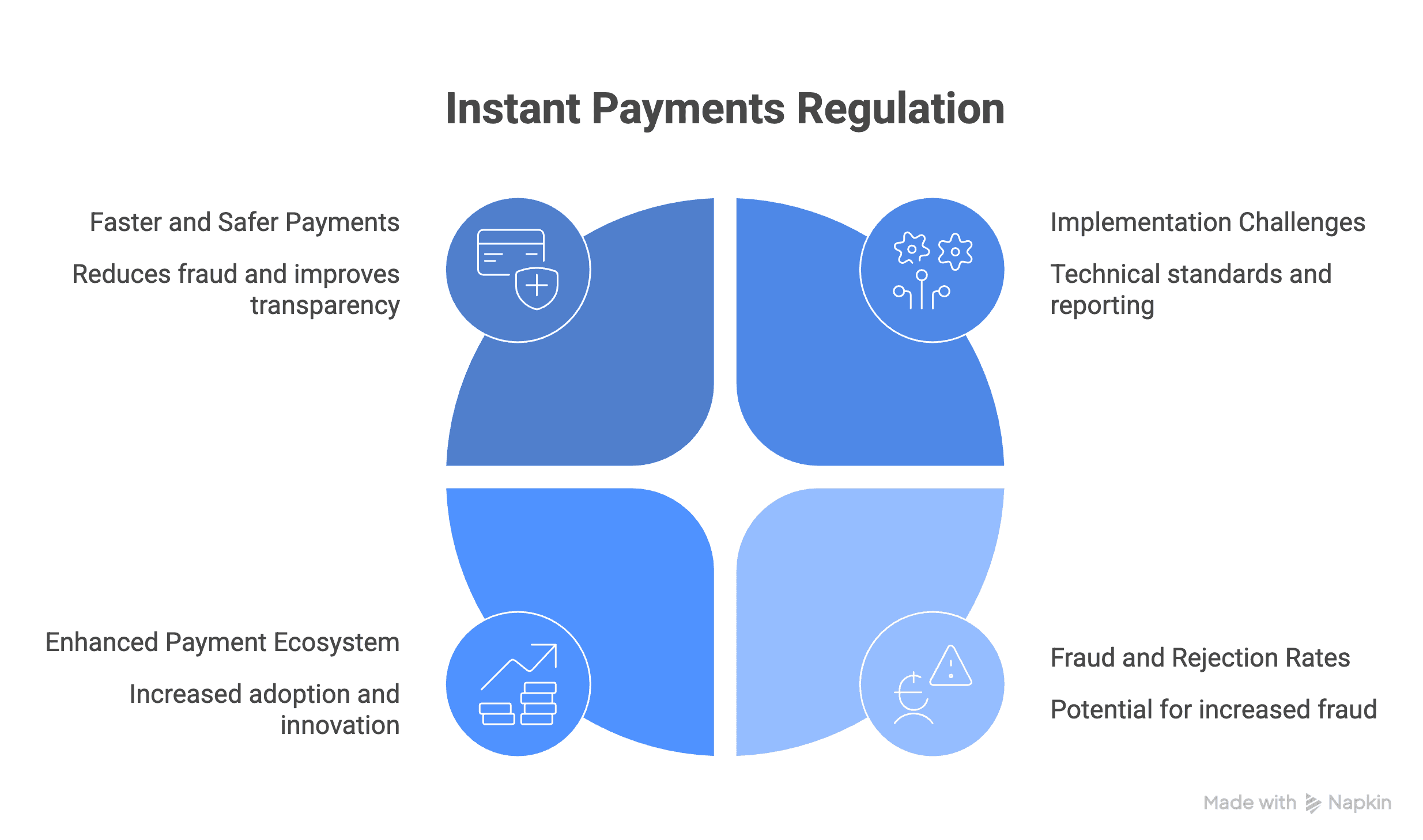
The Instant Payments Regulation adds another practical layer. In the euro area payment service providers must enable sending and receiving instant euro transfers with payee name verification to reduce fraud. This requirement reflects the broader push to make payments faster and safer while giving supervisors better data on charges and rejection rates. The European Banking Authority has published implementing technical standards to standardise the reporting that supports this transparency with the first mandatory reports due in April 2026.
Also read: How to prepare for a compliance audit
What Lies Ahead with PSD3 and Related Changes
Looking ahead the agreed but not yet applicable PSD3 and Payment Services Regulation will strengthen fraud liability rules harmonise authorisation further and tighten supervision of non bank providers. They also emphasise better consumer protections against hidden fees and online fraud. Until those rules take effect however the focus stays on executing PSD2 and the current anti money laundering package with precision. AMLD6 which must be transposed into national law by 10 July 2027 will bring further harmonisation of beneficial ownership registers and cooperation mechanisms.
Payment service providers sit at the centre of the EU financial system so the rules are deliberately detailed and interconnected. They exist because past incidents showed that gaps in documentation or inconsistent processes can expose both businesses and their clients to unnecessary risk. When teams centralise client records track document expiry dates and enforce the same workflow for every onboarding they turn regulatory obligations into a competitive advantage rather than a daily scramble.
Frequently Asked Questions
What is the difference between a payment institution and an electronic money institution under current EU rules?
A payment institution provides payment services listed in PSD2 Annex I but cannot issue electronic money or hold client funds beyond what is needed for a specific transaction. An electronic money institution can issue e money which represents a claim on the issuer and must safeguard those funds separately. Both require authorisation but electronic money institutions face additional prudential rules on own funds.
How long must PSPs keep KYB records and why does the five year period matter?
EU rules generally require retention for at least five years from the end of the business relationship to allow supervisors to review historical compliance during inspections or investigations. Shorter periods risk findings during audits while longer retention beyond legal minimums can create unnecessary storage burdens unless your internal policy justifies it.
Do PSPs need to perform enhanced due diligence on every high risk merchant?
Yes when risk factors such as the merchants sector transaction volume or jurisdiction indicate higher money laundering exposure you must apply enhanced measures including deeper beneficial ownership checks source of funds verification and more frequent ongoing monitoring. The current AML framework sets the baseline while AMLD6 will add further clarity from 2027.
What changes does the Instant Payments Regulation actually impose on day to day operations?
Euro area PSPs must offer the ability to send and receive instant euro transfers verify the beneficiary name against the IBAN and apply the same or lower fees than for standard transfers. The verification step helps prevent authorised push payment fraud and requires systems to flag mismatches before execution with reporting starting in 2026.
How do EBA opinions on crypto asset service providers affect traditional PSPs?
Recent EBA opinions clarify the interplay between PSD2 and MiCA for entities handling electronic money tokens that qualify as payment services particularly after the end of the transition period in March 2026. Traditional PSPs must ensure any partnerships or white labelling arrangements maintain full compliance with authorisation and AML rules.
Is GDPR compliance separate from PSD2 or AML obligations for payment service providers?
No the rules overlap. PSD2 and AML require processing of personal data for fraud prevention and due diligence but only to the extent necessary and in line with GDPR principles of data minimisation purpose limitation and security. Competent authorities expect clear policies on data sharing during passporting or host state requests.
What are the most common audit findings for PSP compliance teams?
Supervisors frequently cite incomplete or inconsistent client files missing evidence of beneficial owner verification and inadequate records of ongoing monitoring. These gaps appear when documentation lives in multiple locations rather than a single structured system.
How will AMLD6 change KYB obligations once it applies?
AMLD6 harmonises beneficial ownership registers across the EU strengthens access for obliged entities and introduces clearer rules on central contact points for cross border providers. It also expands predicate offences and cooperation between financial intelligence units which will require PSPs to update their risk assessment frameworks by July 2027.
Can PSPs rely on third parties for parts of the KYB process?
Yes under strict conditions set out in the AML framework. Reliance on another obliged entity requires written agreements and ongoing verification that the third party applied adequate measures. The provider remains ultimately responsible and must document the reliance for audit purposes.
What triggers a regulatory inquiry that PSPs should prepare for proactively?
Common triggers include rapid growth in merchant onboarding volumes a change in beneficial ownership significant fraud incidents or a licence renewal application. Preparing complete client files in advance turns these events into routine demonstrations of a well managed programme rather than stressful scrambles.
How SpeedyDD Can Help
SpeedyDD exists to support exactly these challenges. It is built as KYB onboarding and compliance infrastructure for regulated businesses that need to centralise documentation maintain consistent audit trails and stay ready for any regulator visit. Our mission is to help complex EU licensed payment service providers electronic money institutions and corporate service providers move from manual processes to audit readiness as a default state without turning compliance into a full time documentation chase. We focus on the ongoing management of the compliance record so your team can spend time on judgement rather than administration. You can contact us here